The Ultimate Guide to Granny Square Patterns: Easy Designs for Every Crocheter
Granny square patterns are the foundation of countless crochet projects. Many beginners feel overwhelmed by different stitch combinations and color changes. But here’s the good news: mastering these versatile squares opens endless creative possibilities.
This guide reveals everything you need to know about granny squares. You’ll discover classic techniques, modern variations, and practical tips. Whether you’re making blankets, bags, or garments, these patterns work beautifully.
Let’s transform those yarn scraps into stunning creations.
Understanding the Basic Granny Square Pattern
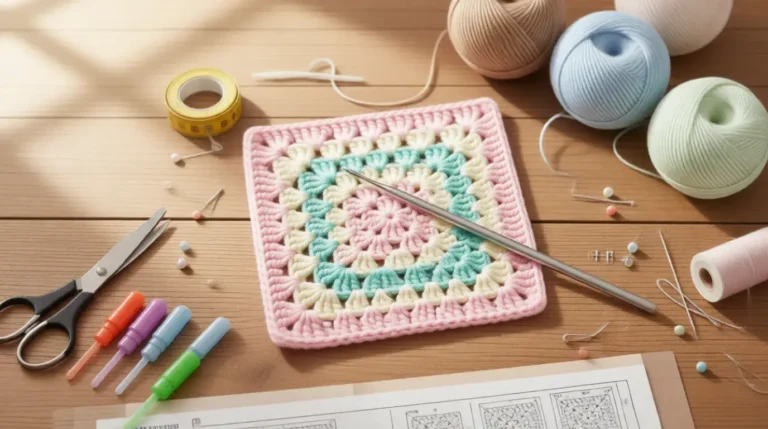
The basic granny square pattern uses simple stitches in repetitive rounds. You start with a chain circle. Then work clusters of double crochet stitches separated by chains.
This creates the signature openwork design.
Core elements include:
- Magic ring or chain-4 foundation
- Double crochet clusters (usually 3 stitches)
- Chain-2 spaces between clusters
- Chain-2 corners for square shaping
Most traditional squares follow this formula. Round 1 establishes the center. Each subsequent round builds outward with consistent spacing. The pattern repeats until you reach your desired size.
Beginners appreciate the forgiving nature of this design. Tension variations don’t show as obviously. Mistakes blend into the overall texture. Plus, you can stop at any round and have a complete square.
Why Granny Squares Remain Popular
These patterns endure for practical reasons. They’re portable—perfect for on-the-go crochet. You can complete one square during a lunch break. They use minimal yarn, making them budget-friendly.
The scrap-busting potential is unmatched. Mix colors freely without overthinking. Each square becomes a small canvas for experimentation.
Essential Materials for Success
You need just a few supplies to start. Choose worsted weight yarn for easiest learning. A size H-8 (5mm) hook works well for most yarns. Scissors and a yarn needle complete your toolkit.
Quality matters more than quantity here. Good hooks prevent hand fatigue. Smooth yarn creates even stitches. Invest in basics that feel comfortable in your hands.
Solid Granny Square Pattern Variations
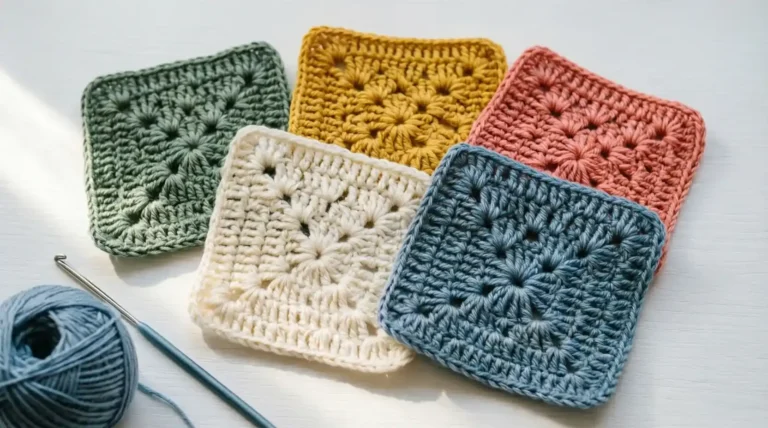
Solid granny square patterns eliminate the traditional openwork. They use close stitches throughout each round. This creates denser fabric with better drape and warmth.
The technique differs slightly from classic versions. You work more stitches per cluster. Chain spaces reduce or disappear entirely. The result looks modern and polished.
Popular solid variations:
| Pattern Type | Stitch Count | Best For |
|---|---|---|
| Filled Granny | 4-5 DC clusters | Blankets, cushions |
| Half-Double Solid | HDC throughout | Wearables, bags |
| Single Crochet Square | SC in spirals | Dishcloths, potholders |
These squares work up faster than you’d expect. The dense fabric requires less finishing. Seams look cleaner when joining multiple squares together.
Creating Perfect Solid Squares
Start with a tight magic ring. This prevents center holes. Work your first round with extra stitches—usually 12 double crochets. This fills the center completely.
Each corner needs clear definition. Use three stitches in corner spaces. Skip the chain-2 gap that traditional patterns include. The stitches themselves create enough bulk.
Maintain consistent tension throughout. Solid patterns show irregularities more than openwork designs. Count stitches at the end of each round. This prevents trapezoid shapes instead of squares.
Flower Granny Square Pattern Designs
Flower granny square patterns add botanical beauty to your projects. These designs feature petal formations in the center rounds. Outer rounds typically use standard granny construction.
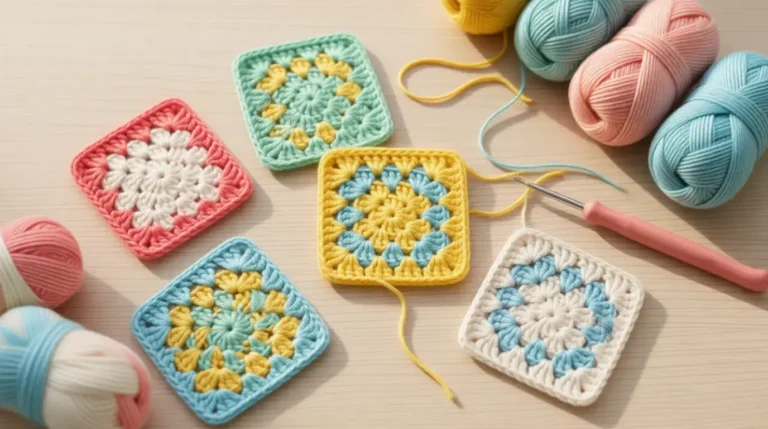
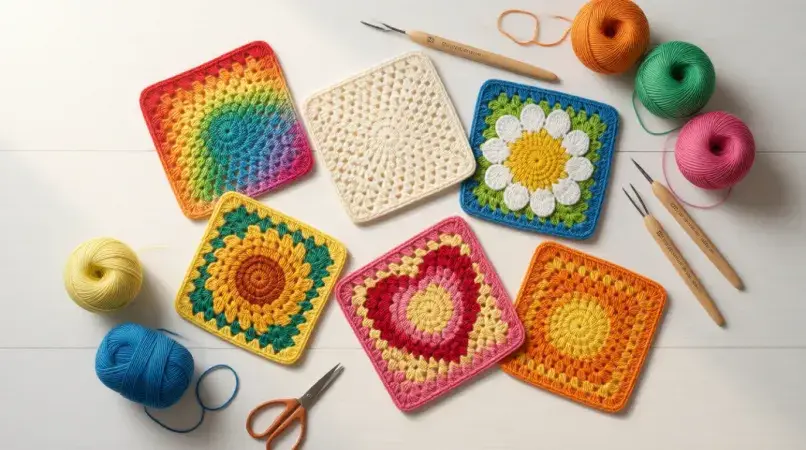
The daisy granny square pattern ranks among favorites. It creates simple petals radiating from the center. Use white for petals and yellow for the middle. Classic and cheerful every time.
Sunflower granny square patterns need bolder colors. Choose golden yellow for petals and brown for centers. Work petals with extended stitches for dramatic effect. The outer rounds use complementary greens or neutrals.
Flower Pattern Comparison:
| Design | Complexity | Rounds Needed | Color Changes |
|---|---|---|---|
| Basic Daisy | Easy | 4-5 rounds | 2-3 colors |
| Sunflower | Intermediate | 5-6 rounds | 3-4 colors |
| Rose | Advanced | 6-8 rounds | 4-5 colors |
The Retro Daisy Granny Square Pattern
This vintage-inspired design captures 1970s charm. Work white petals in round 2 using puff stitches or popcorn stitches. These create dimensional texture that stands out.
The background typically uses bright, saturated colors. Think orange, avocado green, or golden yellow. This contrast makes the white daisies pop dramatically.
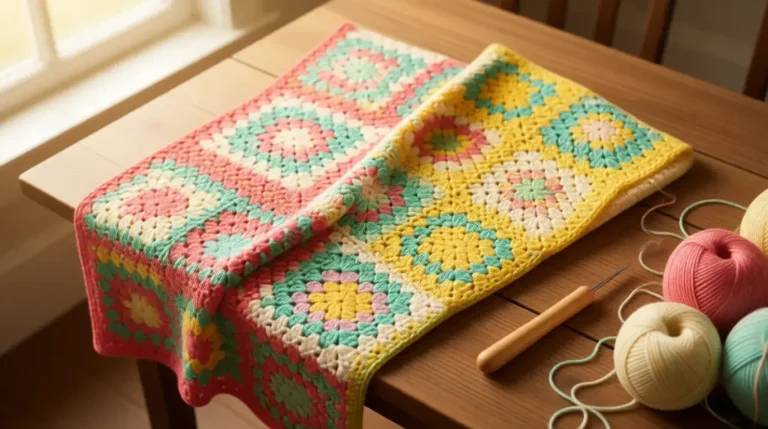
Join multiple daisy squares for stunning blankets. Alternate background colors for patchwork effect. Each square tells its own story while creating cohesive design.
Sunburst Granny Square Pattern Features
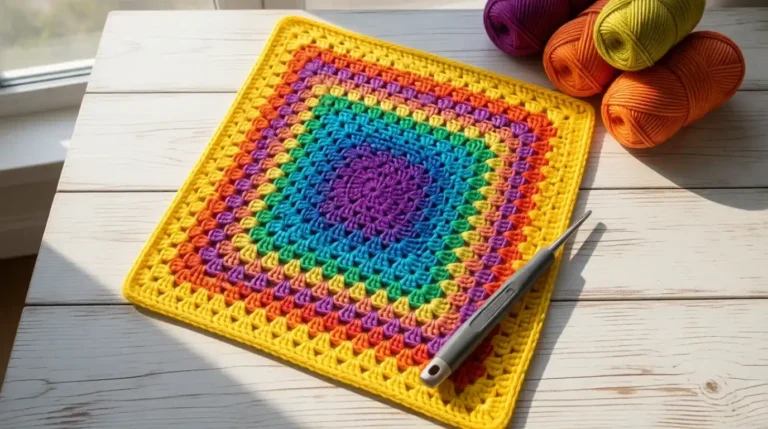
Sunburst patterns radiate color from center to edge. They use gradual color transitions. Start with dark centers and work outward to lighter shades.
This creates an ombre or gradient effect naturally.
Work color changes at the end of rounds. Carry unused yarn along the back if alternating frequently. This saves time weaving in multiple ends later.
The dimensional quality comes from stitch height variations. Mix single, half-double, and double crochet strategically. This creates the illusion of light radiating outward.
Modern Granny Square Pattern Free Resources
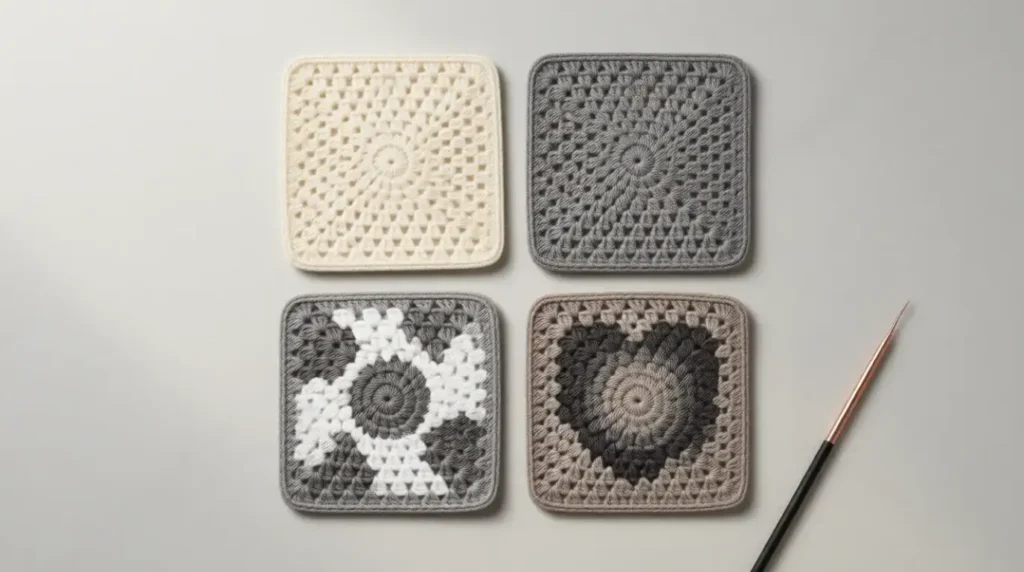
Modern granny square patterns free of charge exist across the internet. Contemporary designers reimagine classic structures with fresh aesthetics. Clean lines, minimalist color palettes, and geometric precision define this style.
These patterns often incorporate textured stitches. Front post and back post techniques add depth. Bobbles, puffs, and clusters create visual interest without complexity.
Where to find quality free patterns:
- Designer blogs and personal websites
- YouTube video tutorials with written patterns
- Online crochet communities and forums
- Social media pattern shares
Always verify pattern accuracy before starting large projects. Read reviews from other makers. Check for errata or corrections posted by designers.
Classic vs. Modern Pattern Elements
Classic granny squares embrace traditional construction. They use symmetrical designs and predictable stitch placement. Color changes happen at round ends for clean transitions.
Modern versions break these rules intentionally. They might use asymmetrical shaping or unexpected stitch combinations. Color changes happen mid-round for painterly effects.
Key Differences:
| Aspect | Classic | Modern |
|---|---|---|
| Color Palette | Bright, varied | Monochrome, muted |
| Stitch Texture | Smooth, consistent | Mixed, dimensional |
| Shape | Strictly square | Sometimes rectangular |
| Joining Method | Whip stitch | Invisible join preferred |
Both approaches have merit. Choose based on your project vision and personal aesthetic preferences.
Heart Granny Square Pattern Tutorial
Heart granny square patterns work beautifully for Valentine’s gifts. The center forms a heart shape through strategic stitch placement. Outer rounds square off the design while maintaining the motif.
These patterns require more attention than basic squares. You’ll work increases and decreases to shape the heart. Follow the pattern exactly for first attempts.
Start with a small chain. Work into it unevenly to create heart curves. One side receives more stitches than the other initially. This asymmetry creates the recognizable shape.
Color Selection for Heart Squares
Red and pink dominate heart square designs obviously. But consider unexpected combinations too. Navy with coral creates sophisticated contrast. Black with red gives edgy appeal.
Use solid colors for the heart itself. This makes the shape clearly visible. Background rounds can introduce patterns or stripes.
Joining Heart Squares Effectively
Arrange hearts consistently before joining. All should point the same direction for cohesive look. Or alternate directions for playful patchwork effect.
Use mattress stitch for invisible seams. This keeps heart shapes clearly defined. Whip stitch creates visible lines that can distract from the motif.
Block finished projects thoroughly. Hearts tend to curl without proper blocking. Pin into shape while damp and let dry completely.
Large Granny Square Pattern Projects
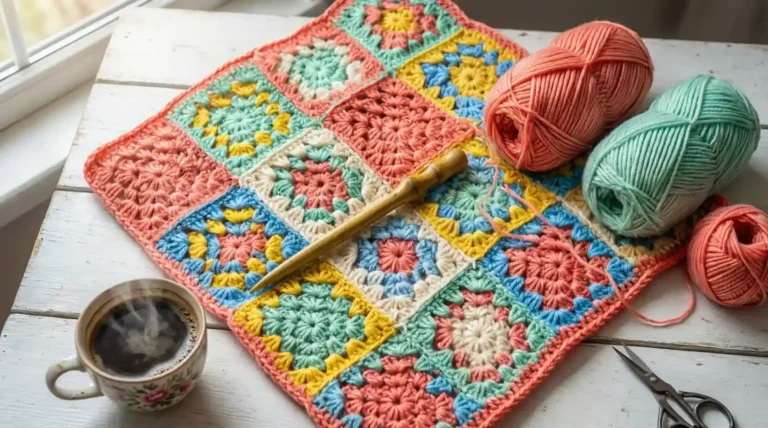
Large granny square patterns work up quickly for impressive results. Instead of joining many small squares, you crochet one massive square. These become instant blankets, shawls, or table covers.
The technique remains identical to small squares. You simply continue adding rounds indefinitely. Most patterns provide instructions through round 10, then you repeat the final round.
Size guidelines for common projects:
- Baby blanket: 25-30 rounds with worsted yarn
- Lap blanket: 40-50 rounds
- Throw blanket: 60-75 rounds
- Afghan: 80-100+ rounds
Yarn requirements increase dramatically with size. Calculate yardage carefully before starting. Running out mid-project with discontinued yarn causes problems.
Managing Large Square Projects
Work in good light to count stitches accurately. Mistakes compound quickly over many rounds. Use stitch markers at corners to track placement.
Take breaks to prevent hand cramping. Large projects involve repetitive motion for extended periods. Stretch your hands and wrists regularly.
Consider your joining method from the start. Continuous rounds create spirals without seams. Joined rounds create clean lines but require more ends to weave in.
Color Planning Strategies
Random scraps create charming, eclectic large squares. No planning required—just grab whatever appeals. This approach works wonderfully for stash-busting projects.
Planned color progressions look more sophisticated. Use gradients from dark to light. Or create stripes with repeating color sequences.
Temperature blankets use daily high or low temperatures. Assign color ranges to temperature brackets. Work one round per day throughout the year. The finished blanket becomes a weather diary.
Free Granny Square Pattern PDF Collections
Granny square pattern PDF files offer convenient offline access. Download and save to your device. Print for physical reference while working. No internet required during crafting sessions.
Many designers provide free PDFs through their websites. Subscribe to newsletters for exclusive pattern access. Some require social media follows or shares.
PDF pattern advantages:
- Work offline without screen glare
- Make notes directly on printed copies
- Easy to organize in digital folders
- Searchable text for quick reference
Always respect designer copyright when using PDFs. Don’t redistribute or sell patterns you didn’t create. Personal use only unless otherwise specified.
Organizing Your Pattern Library
Create a digital filing system for downloaded patterns. Sort by pattern type, designer, or project category. Use descriptive file names for easy searching later.
Consider cloud storage for accessibility across devices. Access patterns from phone, tablet, or computer. Backup files prevent loss if devices fail.
Print patterns you use frequently. Store in page protectors within binders. This protects them from spills and stains. Add tabs for quick navigation between favorites.
Simple Granny Square Pattern for Beginners
Simple granny square patterns focus on basic stitches only. No advanced techniques required. Perfect for absolute beginners learning fundamental crochet skills.
These patterns typically use just chains and double crochets. Four to six rounds create useful squares. Small enough to finish quickly but large enough to see progress.
Start with solid-colored yarn for first attempts. This eliminates color-change confusion. Focus entirely on stitch technique and counting. Add colors once comfortable with the basic structure.
Common Beginner Mistakes to Avoid
Skipping the foundation chain twist causes problems. Your first round won’t lie flat. Always work into the back bump of foundation chains.
Forgetting corner chains creates rounded shapes instead of squares. Count carefully at each corner. Three double crochets, chain 2, three more double crochets—this formula never varies.
Inconsistent tension shows more in granny squares than other projects. Relax your grip on the hook. Let yarn flow smoothly through your fingers. Practice creates muscle memory for even stitches.
Granny Square Pattern Diagram Reading
Granny square pattern diagrams use international crochet symbols. These visual representations transcend language barriers. Once learned, you can follow patterns from any country.
Each stitch has a specific symbol. Chains appear as ovals. Double crochets look like vertical lines with crossbars. Slip stitches show as dots.
Diagrams read from center outward in rounds. Or bottom to top if worked in rows. Arrows indicate working direction. Numbers mark round or row sequence.
Basic Symbol Guide:
- Chain (ch): Small oval
- Slip stitch (sl st): Small dot
- Single crochet (sc): Small X or plus sign
- Double crochet (dc): Vertical line with one crossbar
- Treble crochet (tr): Vertical line with two crossbars
Practice reading diagrams with simple patterns first. Compare diagram to written instructions simultaneously. This builds confidence in symbol interpretation.
Converting Written Patterns to Diagrams
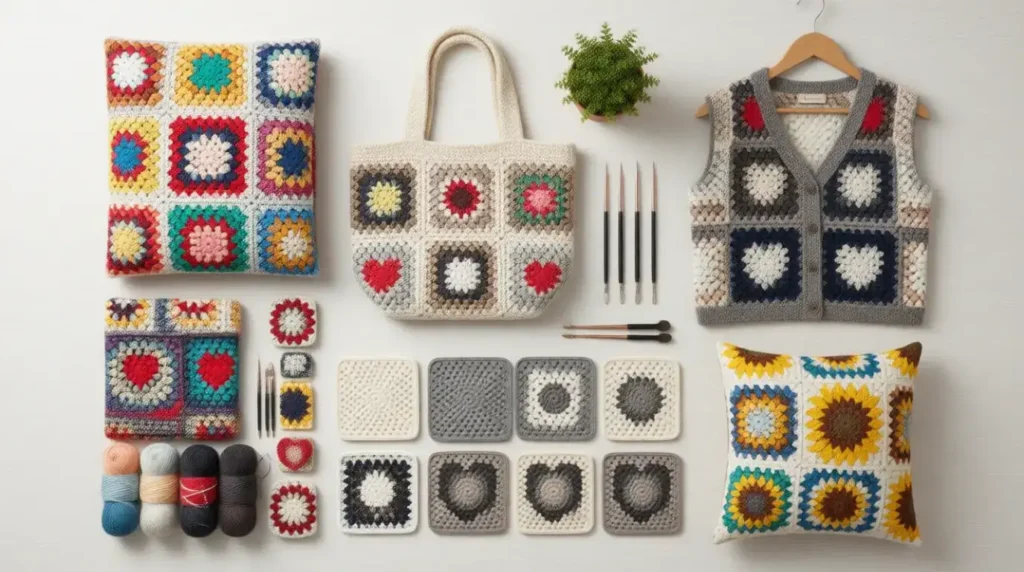
Some crocheters prefer visual learning through diagrams. Others work better from written instructions. Converting between formats helps understanding.
Draw your own diagrams as you work through written patterns. This reinforces pattern structure mentally. You’ll recognize variations and modifications more easily.
Use graph paper for precise symbol placement. Rulers keep symbols aligned properly. Colored pencils help distinguish different yarn colors in multi-color patterns.
Frequently Asked Questions
How many granny squares do I need for a blanket?
The number depends on square size and desired blanket dimensions. For 6-inch squares making a 48×60 inch throw, you need 80 squares (8 wide by 10 long). Calculate by dividing blanket width and length by square size. Always make a few extra for mistakes or pattern adjustments.
What’s the best yarn for a granny square pattern?
Worsted weight acrylic yarn works best for beginners. It’s affordable, machine washable, and widely available. Brands like Red Heart Super Saver or Lion Brand Vanna’s Choice offer excellent color ranges. Smooth yarn shows stitches clearly. Avoid fuzzy or novelty yarns until you master basic techniques.
Can I make a solid granny square pattern without holes?
Yes, absolutely. Use more stitches per cluster and eliminate chain spaces between clusters. Work four or five double crochets directly into each space instead of three with chain gaps. This creates dense fabric perfect for garments, bags, or winter blankets.
How do I join granny squares together neatly?
The invisible join method creates seamless connections. Place squares wrong sides together. Single crochet through both layers, working through corresponding stitches. Alternatively, use mattress stitch with a yarn needle for completely invisible seams. Both methods require practice for consistent results.
What makes a flower granny square pattern different from basic patterns?
Flower patterns incorporate dimensional petals in center rounds. They use specialized stitches like popcorns, puffs, or clusters to create texture. Color changes happen more frequently to define petals and centers. Outer rounds typically return to standard granny construction for easier joining.
Where can I find free granny square pattern diagrams?
Check designer blogs, Pinterest, and YouTube channels dedicated to crochet. Websites like Ravelry offer thousands of free patterns with diagrams. Many independent designers share patterns on Instagram with diagram links. Always verify pattern accuracy through user reviews before starting projects.
Conclusion
Granny square patterns offer endless creative possibilities for crocheters of all levels. You’ve learned basic construction, explored modern variations, and discovered flower designs. These versatile squares transform simple stitches into beautiful projects.
Start with a simple granny square pattern to build confidence. Practice the basic version until stitches feel automatic. Then experiment with solid variations, flowers, and hearts.
Remember: imperfection adds handmade charm to your work. Don’t stress over minor inconsistencies. Each square you complete improves your skills naturally.
Grab your hook and favorite yarn today. Create your first granny square right now. You’ll be amazed how quickly these addictive little squares multiply into stunning finished projects.